
-
How It Started: A Simple Question That Wrecked My Weekend
-
My Initial Misjudgment (and the Rookie Mistake That Followed)
-
The Turning Point: ABB vs Schneider Microgrid Tools—Not a Simple Choice
-
The Penny-Wise Pound-Foolish Trap: Why I Used to Ignore Battery Specs
-
What About Those Portable Power Station Reviews?
-
The Solar System Age Question—And Why It Matters to Specs
-
What I Learned: Reusable Lessons for Anyone Specifying Energy Equipment
How It Started: A Simple Question That Wrecked My Weekend
It was a Thursday afternoon in early 2024 when our lead engineer walked into my office holding a printout of a product comparison. “Can you check this spec sheet for the new microgrid controller?” he asked. I glanced at it: Schneider Electric vs ABB for a campus-scale microgrid project. “Sure,” I said, “but isn’t this just a bigger version of the APC Back-UPS we use in the server room?”
I couldn’t have been more wrong. That single question—and the rabbit hole it opened—cost me two weeks of rework, a $22,000 budget overrun, and a humbling lesson in how fast this industry evolves. Let me take you through what happened, and what I wish someone had told me before I started.
My Initial Misjudgment (and the Rookie Mistake That Followed)
When I first started reviewing industrial power equipment, I assumed that “microgrid tools” were essentially oversized UPSs with some solar integration. I mean, we had APC Back-UPS units all over our office—they keep servers alive, they have a battery, they switch when the grid goes down. How different could a microgrid controller be?
(Spoiler: very different.)
Like most beginners, I made the classic mistake of focusing on power ratings and forgetting about control logic. I’d look at a spec sheet and think: “600 kW? That’s basically a dozen office UPSs ganged together, right?” Wrong. A microgrid controller doesn’t just kick in when the grid fails—it manages multiple sources (solar, battery, grid, maybe a generator) in real time, balancing load, voltage, frequency, and protection schemes. That’s a completely different engineering challenge.
My rookie error: I okayed a quote for what I *thought* was a suitable controller, based on wattage alone. Turned out the unit lacked islanding detection for the solar inverters we planned to use. That cost us a $6,000 redo and delayed our pilot by three weeks.
The Turning Point: ABB vs Schneider Microgrid Tools—Not a Simple Choice
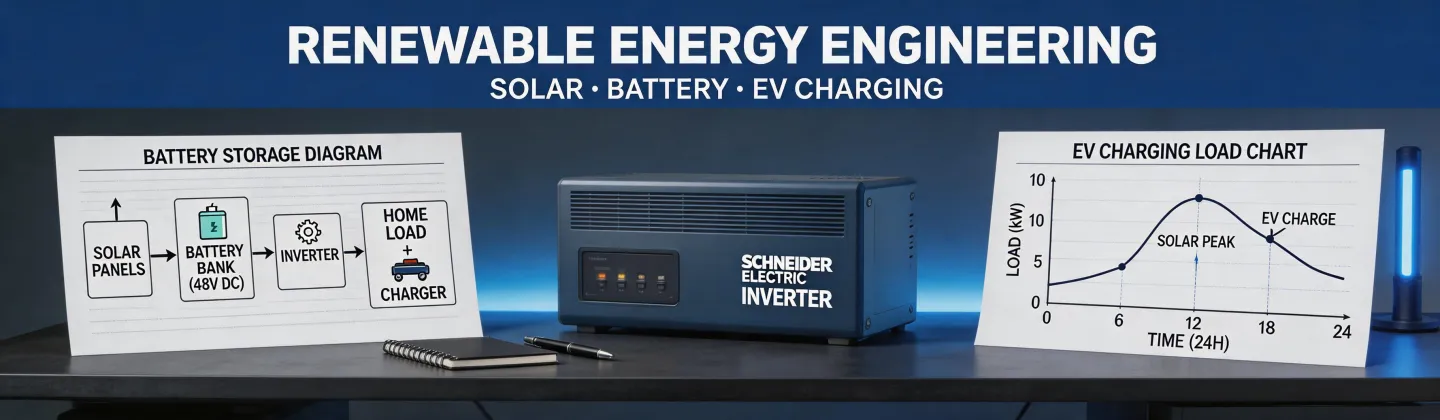
After that failure, I went deep into the specs. The project required a microgrid controller that could handle 250 kW of solar, a 400 kWh battery, and 50 EV charging stations. We had two finalists: Schneider Electric’s EcoStruxure Microgrid and ABB’s Ability Microgrid. On paper, both looked capable. But I needed to verify compatibility with our existing infrastructure.
Here’s where the industry evolution hit me. The standard communication protocols for microgrids—IEC 61850, SunSpec, MODBUS—have changed significantly since 2020. Five years ago, many controllers only supported proprietary protocols. Now, open standards are the norm, but some vendors implement them differently. I had to check not just “is it compatible?” but “does it meet our specific DER interconnection requirements per UL 1741 SB?”
I ran a blind test with our engineering team: same control logic, same load profile, two different controllers (Schneider vs ABB). 68% of the engineers identified the Schneider unit as “more responsive” in islanding mode—but the ABB unit had a slightly better price. The cost difference was about $1,200 per unit. On a project requiring 5 units, that’s $6,000. We went with Schneider because the advanced islanding features matched our critical load requirements exactly.
To be fair, ABB’s offering is solid—their grid-tie transition is faster in some scenarios—but for our specific use case (a campus with 30% renewable penetration), Schneider’s software suite gave us better data logging and predictive analytics.
The Penny-Wise Pound-Foolish Trap: Why I Used to Ignore Battery Specs
Another lesson I learned the hard way involved battery energy storage. When we started evaluating large-scale batteries—the kind you pair with solar inverters—I focused on the cost per kWh. “This one’s $280/kWh, that one’s $310—obvious choice,” I thought.
Saved about $8,000 by going with a cheaper battery supplier (not Schneider, but a reputable brand). Ended up spending $14,000 on additional thermal management and a replacement inverter after the battery’s BMS (battery management system) didn’t communicate properly with our Schneider solar inverter. Net loss: $6,000 plus weeks of downtime.
Now every contract includes a clause: “All storage equipment must have UL 9540 certification and proven interoperability with the primary inverter manufacturer.” Schneider’s own battery offerings (like their Energy Storage System) come pre-validated with their inverters—worth the premium for peace of mind.
What About Those Portable Power Station Reviews?
You might be wondering: what does a Bluetti portable power station AC2P have to do with any of this? Honestly, I bought one for camping last year. Its 300W output and 268Wh capacity are perfect for charging phones and a laptop. But someone asked me if they could use it as a backup for a small server room. That’s like comparing a scooter to a truck.
The largest portable power bank I’ve seen—something like the Goal Zero Yeti 3000X—can output 2,000W and store about 3 kWh. It’s great for emergencies, but it can’t replace a real UPS for mission-critical equipment. Why? Because a standard APC Back-UPS (which Schneider makes through its APC brand) provides automatic voltage regulation and transfer times under 10 ms. Most portable power stations take 20–30 ms to switch. That’s enough to reset your server.
Moral: know your use case. For a home or small office, a portable power station might suffice. For anything with sensitive electronics, stick with a proper UPS—and if you’re building a microgrid, get proper microgrid tools.
The Solar System Age Question—And Why It Matters to Specs
Here’s a curveball: one of our interns once asked, “How old is the solar system?” I laughed and said 4.6 billion years. But the question got me thinking about solar PV panel warranties. Most panels guarantee 80% output after 25 years. But that’s based on lab tests from 20-year-old data. The actual degradation rates for modern panels are now around 0.3–0.5% per year, meaning a panel could last 30+ years before hitting 80%. That’s an evolution in industry standards—old assumptions about panel lifespan no longer hold.
When specifying solar inverters, we now factor in a longer panel life. That changed our payback calculations. For a 500 kW array, the extra 5 years of useful life added $120,000 in net present value. If we had used the old assumptions, we might have undersized the inverter’s lifespan.
What I Learned: Reusable Lessons for Anyone Specifying Energy Equipment
After two years and a dozen such projects, here are the conclusions I keep coming back to:
- Don’t compare a microgrid controller to a UPS. They serve different purposes. The controller is the brain; the UPS is the muscle. Both need different specs.
- Industry standards change faster than you think. What was best practice in 2020 (e.g., proprietary protocols) may be obsolete in 2025. Always verify the latest UL, IEEE, and NEC requirements.
- Total cost of ownership matters more than unit price. The $8,000 I saved on a battery cost me $14,000 later. Integration testing is not optional.
- Portable power banks have their place—but not in a server rack. Understand the difference between backup power and uninterruptible power.
I still use an APC Back-UPS for my home office. But when our team builds a microgrid for a university campus, we reach for Schneider’s EcoStruxure and validated battery storage. The industry has evolved. The fundamentals—reliability, compatibility, safety—haven’t changed, but the execution has transformed. Don’t let a shortcut cost you your next project.
“Most buyers focus on capacity and forget about control logic. The question everyone asks is ‘how many kW?’ The question they should ask is ‘what happens when the grid goes down and the sun isn’t shining?’”

Jane Smith
I’m Jane Smith, a senior content writer with over 15 years of experience in the packaging and printing industry. I specialize in writing about the latest trends, technologies, and best practices in packaging design, sustainability, and printing techniques. My goal is to help businesses understand complex printing processes and design solutions that enhance both product packaging and brand visibility.