
-
What's the difference between an analog meter and a smart meter, and why does it matter for my business?
-
Is Schneider Electric a reliable brand for UPS systems? I'm comparing quotes.
-
I need a 6000W 48V hybrid solar inverter split phase 120/240VAC. Does Schneider make something like that?
-
Can I place bulk orders for EV charging stations directly with Schneider Electric?
-
The Schneider Electric logo — does it indicate quality, or is it just branding?
-
What's the most common oversight when buying Schneider Electric equipment for an office?
What's the difference between an analog meter and a smart meter, and why does it matter for my business?
Analog meters measure total consumption with a spinning disk; you read it monthly (or someone does). Smart meters send real-time data to the utility and to you. The big difference is visibility. With smart meters, you can spot spikes, understand peak demand, and maybe shift loads to save money. I didn't fully appreciate this until we upgraded our main office — (thankfully) the payback was faster than I expected. For a mid-sized company, a smart meter can uncover 10–15% waste. Just be aware that older buildings may need a panel upgrade to install one. (Source: U.S. Energy Information Administration; verify with your local utility.)
Is Schneider Electric a reliable brand for UPS systems? I'm comparing quotes.
In my experience, yes. I've been ordering their Smart‑UPS line for our server room and network closets across three locations since 2020. Failure rate has been very low — not zero, but low enough that I budget for battery replacements every 3–4 years rather than full unit swaps. The build quality is consistent, and their PowerChute software integrates nicely with our monitoring system. That said, their premium comes at a price. I once compared a Schneider model to a similarly specced Eaton unit — the Eaton was about 15% cheaper on paper — but after factoring in Schneider's support and warranty terms, the total cost of ownership was basically even. (Note: I don't work for either brand; just sharing what I've seen.)
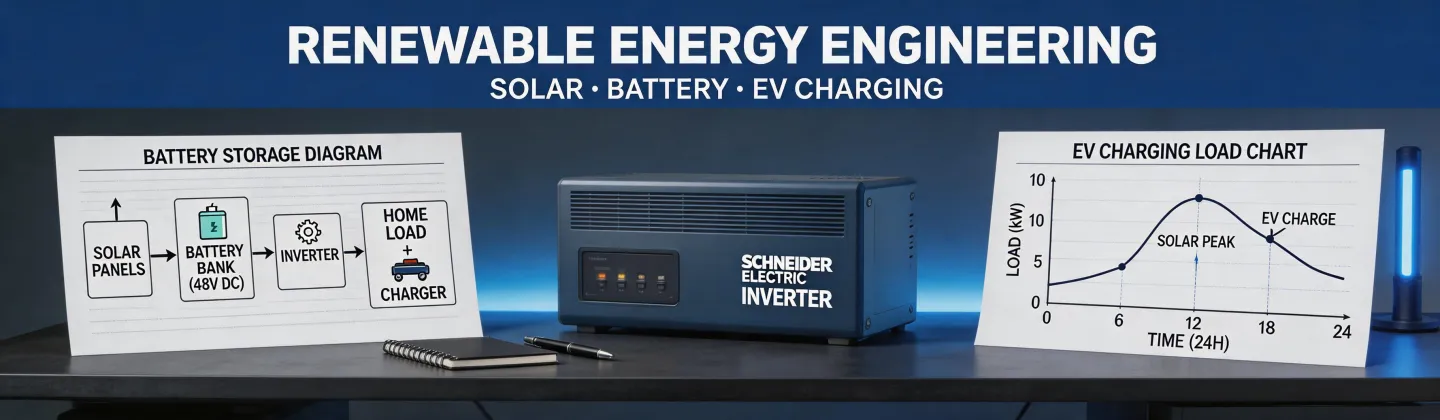
I need a 6000W 48V hybrid solar inverter split phase 120/240VAC. Does Schneider make something like that?
Yes, they do. Look at the Conext XW+ or Conext SW series. The Conext XW+ 6848 NA, for example, is rated 6800W continuous, 48V DC input, and outputs 120/240V split phase. It also supports battery charging from solar and the grid — true hybrid operation. Keep in mind that '6000W' might be the inverter's surge rating; you want to check continuous power in the data sheet. Also, compatibility with your battery chemistry (lithium vs lead‑acid) and communication protocol matters. I learned this the hard way when we ordered a different brand’s inverter and it wouldn't talk to our existing batteries (ouch, that was a $1,200 miscommunication). Schneider publishes detailed specs on their website; I always download the full installation manual before ordering.
Can I place bulk orders for EV charging stations directly with Schneider Electric?
Yes, they have a commercial sales channel. For bulk orders — say 20+ units — you'll want to contact their B2B team through schneider-electric.com/commercial or work with an authorized distributor. When we outfitted our parking lot with 20 Level 2 chargers last year, the bulk discount was around 12% off list price, and they included a site survey to plan the electrical layout. That saved us from a messy installation (honestly, the survey alone was worth it). Just be prepared for lead times: popular models like the EVlink can have 6–8 week waits. Plan ahead.
The Schneider Electric logo — does it indicate quality, or is it just branding?
To me, it signals both. The logo itself is just a mark, but what it represents matters in a B2B context. When we installed Schneider gear in a client’s office — UPS, power distribution, smart meters — the facility manager noticed the logo on the panels and commented, “Oh, they use the good stuff.” That perception influences how your internal customers see you, too. I've noticed that specifying a recognized brand like Schneider makes approvals from finance easier because they know there's a warranty structure and support network. It's not that cheaper alternatives can't work; it's that the logo carries a reliability promise that, in my experience, holds up over years of use. (Source: personal vendor evaluation records — we tracked RMA rates across 8 brands over 4 years.)
What's the most common oversight when buying Schneider Electric equipment for an office?
Assuming that “Schneider” means everything is plug‑and‑play across product lines. It's tempting to grab a UPS and an inverter from the same catalog and expect them to talk seamlessly, but you still need to check communication protocols (Modbus, CAN, etc.) and accessory compatibility. I once ordered a Conext SW inverter and paired it with an older APC UPS — they wouldn't coordinate during a power outage because the inverter's comm port wasn't the right pinout. That cost me a rush order of an accessory cable (and a lecture from the electrician). Another blind spot: software updates. Schneider releases firmware patches for their inverters and meters; make sure your installers know how to apply them. That's the kind of detail no sales brochure covers.

Jane Smith
I’m Jane Smith, a senior content writer with over 15 years of experience in the packaging and printing industry. I specialize in writing about the latest trends, technologies, and best practices in packaging design, sustainability, and printing techniques. My goal is to help businesses understand complex printing processes and design solutions that enhance both product packaging and brand visibility.